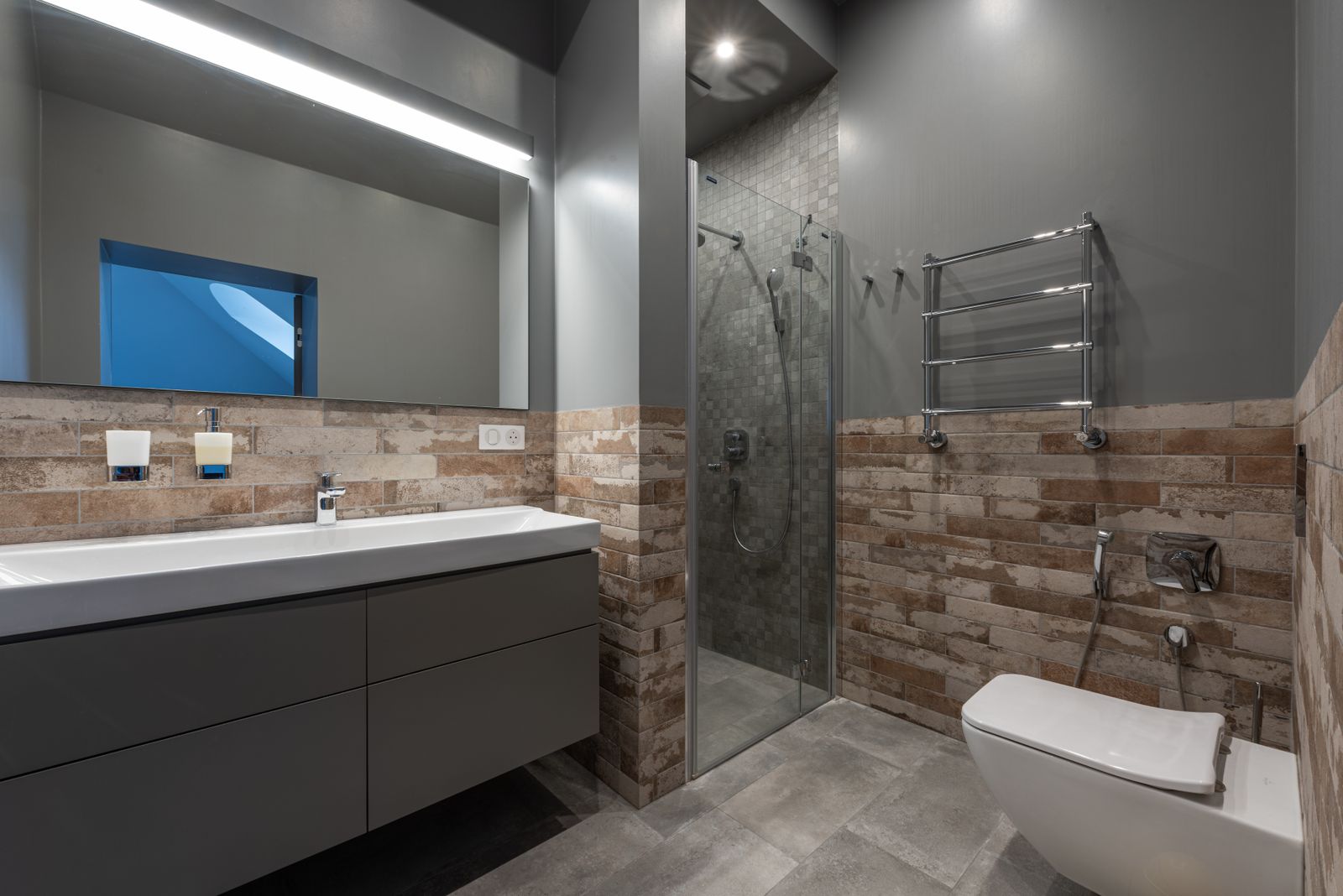
A bathroom renovation is one of the most useful upgrades in a home, but it is also one of the easiest rooms to get wrong. Plumbing, ventilation, storage, lighting, waterproofing and daily routines all meet in one compact space. A good bathroom is not just attractive on the day it is finished; it stays easy to clean, comfortable to use and sensible to maintain.
Start with the routine, not the tiles
Before choosing products, map the way the room is used. A family bathroom needs towel storage, hard-wearing surfaces and enough space for busy mornings. An ensuite may need quieter lighting, better extraction and a shower that works well without waking the whole house. A downstairs cloakroom may be more about handwashing, ventilation and a small basin that does not dominate the floor.
Write down the frustrations with the current room: no storage, awkward door swing, poor shower pressure, dark corners, cold floor, tired sealant, or a bath no one uses. Those notes become the brief. They are usually more useful than a mood board.
Plan the layout around clearances
The best layouts preserve clear movement. Doorways, shower entrances and vanity drawers need space to open properly. If the room is narrow, consider wall-hung furniture, a sliding shower door, a fixed glass shower panel, or a compact vanity with drawers rather than doors. In a small bathroom, every hinge and handle matters.
- Keep the toilet position practical unless moving soil pipework is worth the cost.
- Place storage where items are used, not just where there is a gap.
- Avoid creating hard-to-clean slivers between furniture, baths and walls.
- Check where pipe boxing, wastes and valves will actually go.
Do not treat ventilation as an afterthought
Bathrooms generate moisture fast. In England, the government’s Approved Document F guidance covers ventilation requirements for dwellings and should be treated as essential reading on renovation projects, especially where a room has poor airflow or no reliable window ventilation. See GOV.UK guidance on Approved Document F.
Good extraction protects decoration, grout, timber, mirrors and indoor air quality. Think about fan location, duct route, backdraft protection, noise level and whether a timer or humidity sensor would suit the household. A quiet fan that people leave switched on is better than a powerful fan everyone avoids because it is loud.
Water use and running costs
Water efficiency is not only about the bill. It also affects hot water demand. The Centre for Alternative Technology notes that taps can run at a wide range of flow rates and that high-flow showers can use a surprising amount of water. Their guide to reducing water use is a useful source when comparing showers, taps and simple fixes.
In practical terms, choose fittings that suit the plumbing system. A beautiful tap that needs higher pressure than the home can provide will disappoint. A shower head that saves water but gives a poor spray pattern may get replaced quickly. Ask for flow rates, pressure requirements and compatibility before ordering.
Storage should be designed in
Bathrooms look calm when daily items have a home. The most useful storage is usually a mix of vanity drawers, mirrored cabinets, a shower niche and somewhere for spare towels or cleaning products. Open shelves can look good in photographs, but closed storage is kinder to real life.
Choose finishes for maintenance
Large-format tiles reduce grout lines. Matt surfaces can hide water marks better than very glossy finishes, but they still need to be cleanable. Brushed metal finishes are forgiving; polished finishes can be beautiful but show fingerprints and limescale faster. If the home is in a hard-water area, this should influence taps, shower glass, waste finishes and cleaning routines.
Where to compare products
For product browsing, Bathroom Warehouse UK lists categories including copper baths, cast iron baths, cast iron vanity units, plunge bathtubs and accessories. Use product pages to compare scale, finish, price and whether a piece suits a standard home, a boutique project or a more commercial setting.
You may also find our small bathroom buying guide helpful if the renovation is mostly about making a compact space work harder.
For specific product decisions, see our guides to walk-in shower screens, trays and drainage and bathroom vanity units.