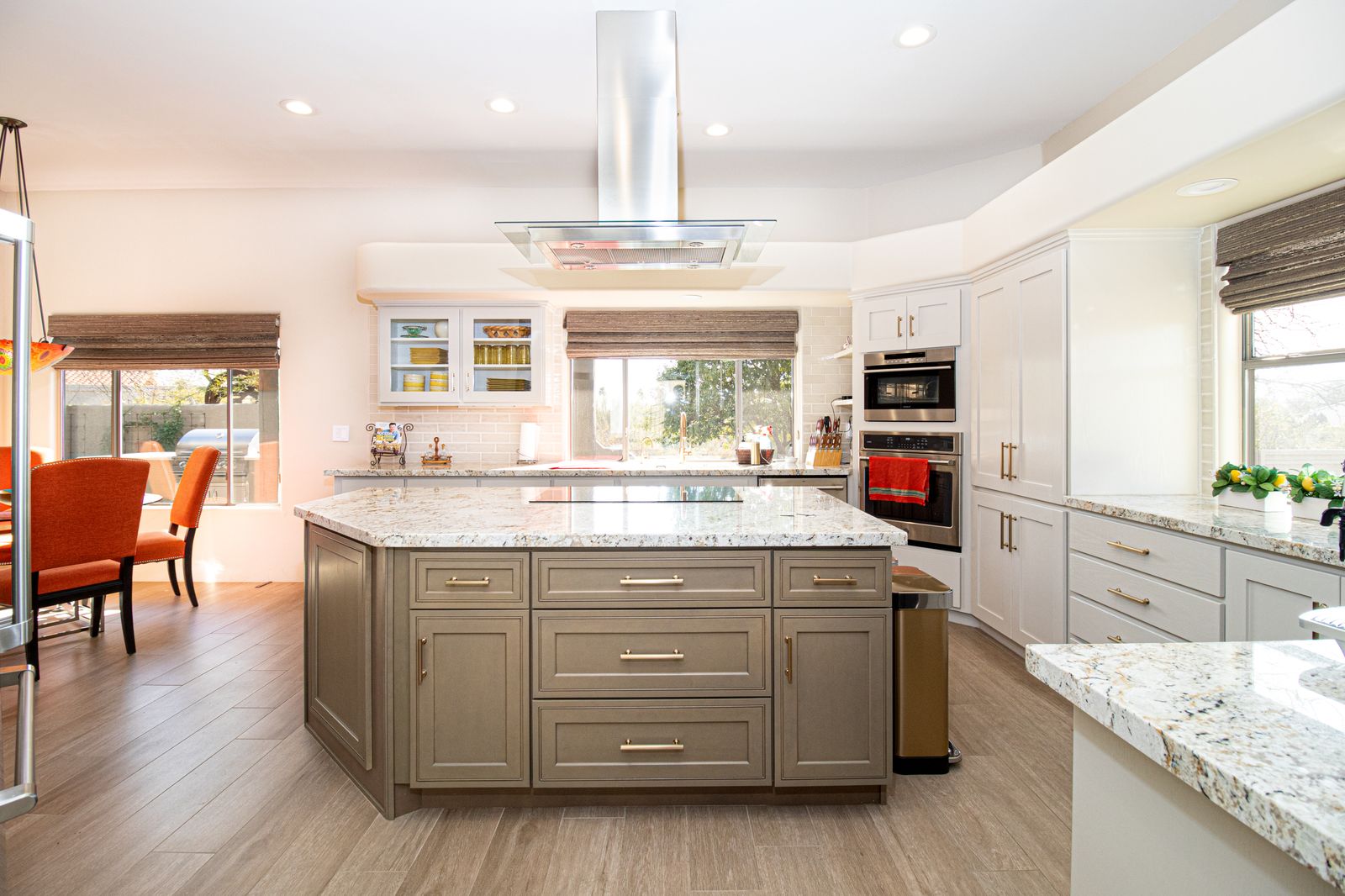
A practical kitchen is less about chasing the latest trend and more about movement. The best layouts keep preparation, cooking, washing and storage close enough to feel effortless, while leaving enough clear worktop for everyday meals.
Design around zones
Think in zones rather than individual cabinets. Keep pans near the hob, mugs near the kettle, cleaning supplies close to the sink, and everyday plates where they can be unloaded quickly from the dishwasher.
The classic working triangle can still be helpful, but real homes often need a more flexible approach. A family kitchen might need a breakfast zone, homework space, charging drawer, recycling area and enough landing space around the oven.
Give worktops a job
Worktop space is most valuable next to the hob, sink and fridge. If those areas are squeezed, the kitchen will feel awkward even if it looks good in photos. Aim for clear landing space beside hot appliances and enough prep space near water.
Use lighting in layers
Ceiling lights alone can make a kitchen feel flat. Add task lighting under wall units, softer lights around dining areas, and brighter focused light where chopping and cooking happen.
Make storage specific
Good kitchen storage is not just more cabinets. Deep drawers, pull-out larders, tray dividers and corner solutions can make daily cooking easier because they reduce rummaging. Store items where they are used, not just where there is an empty cupboard.
For more room-by-room planning ideas, read our small bathroom buying guide or our guide to bedroom storage ideas.
Leave a Reply